Tag Archives: muscle recovery

Bodybuilder resting after a hard workout to support muscle recovery

You Train Hard, But Your Muscles Grow During Recovery: Why Sleep Matters for Muscle Growth

You can spend an hour pushing yourself through heavy squats, presses, rows and deadlifts. You can finish a workout exhausted, covered in sweat and feeling like you have done everything possible to build more muscle.

But the interesting part is this:Training gives your muscles a reason to adapt. The actual process of repairing and rebuilding tissue continues after you leave the gym, during the hours of recovery that follow.

And one of the most important parts of that recovery happens while you are asleep.

That is why sleep deserves far more attention in bodybuilding than it often gets.Many people carefully track their workouts, count their protein intake and think about supplements, but then treat sleep as something they can sacrifice whenever life gets busy.

If that sounds familiar, it may be time to rethink your approach.

Training Is the Stimulus, Not the Whole Process

Resistance training places stress on your muscles.

When you perform a challenging set, your muscles are exposed to mechanical tension and other physiological stresses that trigger a series of adaptations. Muscle protein synthesis increases in response to resistance exercise, and nutrition can further influence this process.

This does not mean your muscles suddenly become bigger the moment you finish a set.

Think of your workout as sending a message to your body:

“We need to become better prepared for this next time.”

Your body then has to respond to that stimulus.

That response requires time, energy, amino acids and recovery.

This is where sleep becomes important.

You could have an excellent training programme, consume enough protein and stay consistent for months. But if your recovery is constantly compromised, you may not be getting as much from your training as you could.

If you are interested in how strength training combines progressive overload, compound exercises, nutrition and recovery, you can also read our guide to strength bodybuilding.

The simple version

  • Training creates the stimulus.
  • Nutrition provides the building materials.
  • Recovery gives your body the opportunity to adapt.
  • Sleep is a major part of that recovery process.

It is not quite accurate to say that muscles only grow while you sleep. Muscle adaptation is a continuous process that occurs over much longer periods.

However, sleep is absolutely part of the environment in which recovery and muscle-building processes take place.

What Actually Happens to Your Muscles After Training?

After a hard resistance-training session, your body enters a recovery period.

Muscle protein synthesis is one of the processes involved in repairing and remodelling muscle tissue. Resistance exercise stimulates this process, while consuming adequate protein supplies amino acids that can be used for protein synthesis.

The long-term accumulation of these adaptations contributes to muscle hypertrophy.

This is important because bodybuilding is not about what happens during one individual workout.

One workout does not create a dramatically larger chest, back or pair of legs.

Instead, you repeatedly provide a training stimulus and then allow your body to recover and adapt.

Week after week, those small adaptations can accumulate.

This is one reason why recovery should be considered part of your training programme rather than something separate from it.

Why Sleep Matters for Muscle Recovery

Sleep is not simply a period when your body switches off.

Your brain and body remain active throughout the night, moving through different stages of sleep and carrying out a wide range of physiological processes.

For someone who trains regularly, sleep provides an extended period without training-related physical stress.

You are not lifting.

You are not running intervals.

You are not doing another heavy leg session.

Instead, your body has time to deal with the demands created by your previous activities.

Research has also shown why poor sleep can be a concern for muscle health.

In one controlled study, a single night of total sleep deprivation reduced post-meal muscle protein synthesis by 18% in healthy young adults. The same study also observed changes in cortisol and testosterone that created a less favourable anabolic environment.

That does not mean one bad night’s sleep will destroy your gains.

It means that consistently treating sleep as unimportant may work against the goals you are trying to achieve in the gym.

Sleep and Muscle Protein Synthesis

Muscle protein synthesis, often abbreviated as MPS, is one of the key processes involved in muscle remodelling.

Resistance exercise stimulates MPS, and protein consumption can further stimulate it by providing amino acids.

The relationship is more complicated than simply saying:

More MPS = automatically more muscle.

Researchers have pointed out that short-term changes in muscle protein synthesis do not perfectly predict long-term muscle hypertrophy. Muscle growth is a complex process influenced by training, nutrition, recovery and many other factors.

Still, the underlying principle is useful for anyone interested in bodybuilding.

Your muscles need to continually remodel themselves.

And recovery periods, including overnight sleep, are part of that process.

What Happens When You Don’t Get Enough Sleep?

This is where things can become frustrating.

You may still be training.

You may still be eating well.

You may even be taking your supplements consistently.

But if you regularly sleep too little, your overall performance and recovery can suffer.

Research examining inadequate sleep and resistance training has found that repeated sleep restriction can negatively affect performance, particularly for some multi-joint movements.

Think about what that means in practical terms.

Imagine you normally go into the gym feeling fresh and capable of doing:

  • 100 kg squats for your planned sets
  • Heavy bench presses
  • Challenging rows
  • Romanian deadlifts
  • Accessory work

Now imagine doing the same programme after several nights of poor sleep.

You might still complete the workout.

But perhaps your concentration is worse.

Your motivation is lower.

Your perceived effort is higher.

Your technique may not feel as sharp.

And your performance may gradually decline.

Over time, that can make it harder to maintain the training quality needed for progressive overload.

One Bad Night Is Not the Problem

It is important not to overreact.

Everyone has a poor night’s sleep from time to time.

Maybe you stayed up late watching a match. Maybe work kept you awake. Maybe you had an early flight. Maybe your child woke you during the night.

That is normal life.

The problem is when poor sleep becomes your normal routine.

There is a major difference between occasionally getting five or six hours and consistently sleeping too little for weeks or months.

Bodybuilding requires consistency.

And recovery should be consistent too.

If you train hard five days a week but regularly sleep poorly, you may be creating a mismatch between the amount of stress you place on your body and your ability to recover from it.

How Much Sleep Does a Bodybuilder Need?

There is no magic number that guarantees muscle growth.

Individual sleep requirements vary.

However, adults generally need enough sleep to feel rested and function properly during the day. For people training seriously, consistently getting sufficient sleep should be treated as one of the foundations of recovery.

Rather than obsessing over a perfect number, look at your overall pattern.

Ask yourself:

  • Do I wake up feeling reasonably refreshed?
  • Do I struggle to stay awake during the day?
  • Has my gym performance started declining?
  • Am I relying heavily on caffeine just to feel normal?
  • Am I constantly sore and fatigued?
  • Is my motivation to train disappearing?
  • Do I regularly cut sleep short to make time for other things?

If several of these sound familiar, your recovery routine may need attention.

Sleep Is More Than Just Time in Bed

Getting into bed at midnight and staring at your phone until 1:00 a.m. is not the same thing as getting into bed at midnight and actually sleeping.

Sleep quality matters as well as sleep duration.

A few simple habits can make it easier to establish a better routine.

Keep a relatively consistent schedule

Going to bed and waking up around similar times can help establish a regular sleep pattern.

Reduce unnecessary stimulation before bed

If you spend the last hour of the evening scrolling through social media, answering work messages and watching highly stimulating content, it may be harder to mentally switch off.

Keep your bedroom comfortable

A dark, quiet and comfortable environment can make falling and staying asleep easier.

Consider when you train

Training in the evening is not automatically bad for sleep. In fact, regular resistance training may have positive effects on sleep quality over time. However, some people may find very intense exercise immediately before bed makes it harder to wind down.

The best approach is to pay attention to how your own body responds.

What About Protein Before Bed?

This is where sleep and nutrition become particularly interesting for lifters.

Protein consumed before sleep can be digested and absorbed during the night, providing amino acids during the overnight recovery period.

A systematic review found that consuming approximately 20–40 grams of casein before sleep can increase overnight protein synthesis, although the evidence for long-term improvements in muscle mass and strength is more nuanced.

There is also research showing that pre-sleep protein supplementation, when combined with prolonged resistance training, can support increases in muscle mass and strength in young men.

But this does not mean you need to drink a protein shake immediately before bed to build muscle.

If you are already consuming enough total protein throughout the day, the exact timing may be less important than your overall intake and diet quality.

Think of pre-sleep protein as an optional strategy rather than a secret bodybuilding trick.

Your total daily protein intake, training programme and overall diet still matter enormously.

If you are comparing different approaches to protein and performance nutrition, our article on creatine vs protein for muscle growth provides a useful starting point.

Do You Need Casein Before Bed?

Not necessarily.

Casein is often discussed because it digests relatively slowly compared with some other protein sources.

That makes it an interesting option for overnight nutrition.

But you can also get protein from ordinary foods.

  • Greek yoghurt
  • Cottage cheese
  • Milk
  • Eggs
  • Lean meat
  • Fish
  • A protein shake

The goal is not to create a magical bedtime meal.

The goal is simply to make sure your overall nutrition supports your training and recovery.

Don’t Let Supplements Replace Sleep

This is worth saying clearly.

No supplement can compensate for consistently poor sleep.

It is easy to get caught up in the supplement side of bodybuilding.

Protein powder.

Creatine.

Pre-workout.

Amino acids.

Recovery products.

Various muscle-building formulas.

Some of these may have a legitimate place in a well-designed nutrition strategy.

But none of them changes the basic requirement for adequate recovery.

If you are sleeping five hours a night and hoping a supplement will somehow make up for it, you are focusing on the wrong part of the equation.

Before worrying about another product, look at the fundamentals.

Training.

Food.

Sleep.

Recovery.

Consistency.

Those are the foundations.

What About Rest Days?

A rest day does not mean you are wasting time.

If your programme involves several demanding resistance-training sessions each week, rest days can give specific muscle groups time to recover from previous training.

That does not necessarily mean lying on the sofa all day.

Walking, light movement and normal daily activity can still be part of a healthy recovery routine.

The important point is that you do not need to train hard every single day to make progress.

In fact, constantly adding more training can become counterproductive if your recovery capacity cannot keep up.

More is not always better. Better is better.

You Don’t Need to Be Sore to Build Muscle

Another common bodybuilding mistake is assuming that soreness equals progress.

If your muscles are extremely sore the next day, it can feel like proof that you had an excellent workout.

But soreness is not a reliable measurement of muscle growth.

You can have a productive workout without being painfully sore.

Likewise, being extremely sore does not automatically mean you built more muscle.

Progress should be measured using more meaningful indicators, such as:

  • Increasing training loads
  • Performing more repetitions with the same weight
  • Improving technique
  • Increasing muscle measurements over time
  • Gradually gaining bodyweight when appropriate
  • Improving strength
  • Maintaining consistency

DOMS can happen after unfamiliar or demanding training, particularly when your muscles are exposed to exercises or loading patterns they are not accustomed to.

But chasing soreness is not a good bodybuilding strategy.

If you regularly struggle with post-workout soreness, you can also read our guide on how to deal with DOMS after a hard workout.

Recovery Is Where Your Training Pays Off

Imagine you spend months trying to improve your physique.

You progressively increase your training.

You improve your technique.

You eat more carefully.

You get enough protein.

You track your workouts.

Then you regularly stay up until 2 a.m. and wake up early for work.

You are technically doing many things right.

But your recovery routine is constantly working against you.

This is why bodybuilding should be viewed as a complete system.

Training is only one part.

Nutrition is another.

Recovery is another.

Sleep connects all of them.

You cannot separate the quality of your training from your ability to recover from it.

A Better Way to Think About Muscle Growth

Instead of thinking:

“I build muscle in the gym.”

Try thinking:

“I stimulate muscle growth in the gym, then give my body the resources and recovery time needed to adapt.”

That small change in mindset can make a big difference.

It takes away the idea that every minute not spent training is wasted.

It also makes rest feel like part of the programme rather than a break from the programme.

Your body does not know that you have a bodybuilding competition six months away.

It simply responds to the combination of stress, nutrition, recovery and time.

Give it a strong stimulus.

Give it enough nutrients.

Then give it the opportunity to recover.

Repeat that process consistently.

What Should You Do Tonight?

If you are serious about building muscle, you do not need a complicated recovery ritual.

Start with the basics.

1. Finish your training

Give your muscles an appropriate training stimulus.

2. Eat enough

Make sure your overall calorie and protein intake matches your goals.

If you are currently working towards gaining muscle mass, our guide to clean bulking and muscle growth covers how supplements fit into a broader nutrition and training strategy.

3. Stay hydrated

Replace fluids lost through normal daily activity and training.

4. Stop treating sleep as optional

Give yourself enough time in bed to get adequate sleep.

5. Keep your sleep routine consistent

A regular schedule can make good sleep easier to maintain.

6. Don’t panic about one bad night

Recovery is about long-term consistency, not perfection.

7. Look at the bigger picture

One workout, one meal or one night’s sleep will not determine your physique.

Your habits over months and years will.

The Bottom Line

The phrase “muscles grow while you sleep” is catchy, but it needs a little context.

Your muscles do not suddenly switch into growth mode the moment your head hits the pillow.

Muscle adaptation is a complex, ongoing process influenced by resistance training, nutrition, recovery and time.

What we do know is that resistance exercise stimulates muscle protein synthesis, while adequate nutrition provides the amino acids needed for muscle remodelling. Sleep is an important part of the recovery environment, and research suggests that significant sleep loss can negatively affect muscle protein synthesis and aspects of physical performance.

So if you are training hard but constantly cutting your sleep short, you may be overlooking one of the simplest parts of your bodybuilding routine.

Train hard. Eat well. Recover properly. Sleep enough.

Because the work you do in the gym only becomes meaningful when your body has the opportunity to adapt to it.

Scientific References

  1. Witard OC, Bannock L, Tipton KD. Making Sense of Muscle Protein Synthesis: A Focus on Muscle Growth During Resistance Training. International Journal of Sport Nutrition and Exercise Metabolism. 2022.
  2. Damas F, Phillips S, Vechin FC, Ugrinowitsch C. A review of resistance training-induced changes in skeletal muscle protein synthesis and their contribution to hypertrophy. Sports Medicine. 2015.
  3. Knowles OE, Drinkwater EJ, Urwin CS, Lamon S, Aisbett B. Inadequate sleep and muscle strength: Implications for resistance training. Journal of Science and Medicine in Sport. 2018.
  4. Lamon S et al. The effect of acute sleep deprivation on skeletal muscle protein synthesis and the hormonal environment. Journal of Physiology. 2021.
  5. Trommelen J, van Loon LJC. Pre-Sleep Protein Ingestion to Improve the Skeletal Muscle Adaptive Response to Exercise Training. Nutrients. 2016.
  6. Snijders T et al. Protein Ingestion before Sleep Increases Muscle Mass and Strength Gains during Prolonged Resistance-Type Exercise Training in Healthy Young Men. Journal of Nutrition. 2015.
  7. Kouw IWK et al. Effects of pre-sleep protein consumption on muscle-related outcomes – A systematic review. Journal of Science and Medicine in Sport. 2020.
Man recovering after a hard workout with DOMS

How to Deal With Muscle Soreness (DOMS) After a Hard Workout

If you have ever finished a hard leg workout feeling completely fine, only to wake up the next morning struggling to walk down the stairs, you have probably experienced delayed onset muscle soreness, better known as DOMS.

That familiar stiffness after squats, lunges, deadlifts, hill sprints, or a new training routine can make even simple movements uncomfortable. Sometimes the soreness is mild and disappears within a couple of days. Other times, it can make sitting down, getting out of bed, or lifting your arms surprisingly difficult.

The good news is that DOMS is usually temporary. It is a normal response to unfamiliar or demanding exercise, particularly activities that involve a lot of eccentric muscle contractions. With the right approach, you can make the recovery period more comfortable and get back to training without constantly feeling beaten up.

In this article, we will look at what actually causes DOMS, how long it normally lasts, what you can do to manage the soreness, and which recovery strategies are actually worth your time.

What Is DOMS?

DOMS stands for Delayed Onset Muscle Soreness. Unlike the discomfort you may feel during a difficult exercise, DOMS usually does not appear immediately after your workout.

Instead, the soreness tends to develop several hours after exercise and becomes more noticeable during the following day or two. Research on exercise-induced muscle damage shows that soreness commonly peaks somewhere around 24 to 72 hours after unfamiliar or strenuous exercise, although the exact timing can vary from person to person.

This is why you might finish a workout on Monday evening thinking everything went perfectly, only to discover on Tuesday morning that your legs have a very different opinion.

Typical symptoms of DOMS include:

  • Muscle tenderness
  • Stiffness
  • A dull or aching sensation
  • Temporary reduction in strength
  • Reduced range of motion
  • Discomfort when stretching or contracting the affected muscle
  • Occasional mild swelling

DOMS is particularly common after exercise that your body is not accustomed to, especially when the workout involves a large amount of eccentric loading.

Why Does DOMS Happen After Exercise?

For years, people often blamed lactic acid for muscle soreness. You may have heard that “lactic acid builds up in your muscles” and causes you to feel sore the next day.

That explanation is far too simplistic.

DOMS is not simply caused by lactic acid sitting in your muscles overnight. The current understanding is much more complicated and involves mechanical stress, changes within muscle tissue, connective tissue, inflammatory processes, and the sensitisation of pain receptors.

One of the biggest contributors is eccentric exercise.

An eccentric contraction happens when a muscle is producing force while it is lengthening. Think about lowering a barbell during a biceps curl, lowering yourself during a squat, walking or running downhill, or controlling the weight during the lowering phase of a bench press.

These movements can place considerable mechanical tension on muscles, particularly when the exercise is new or performed at a higher intensity than your body is used to.

Research into eccentric exercise has found that unfamiliar eccentric loading can lead to temporary changes in muscle function, stiffness, swelling and soreness.

Fortunately, your body adapts.

After you become accustomed to a particular training movement, the same workout generally produces less soreness and muscle disruption. This is sometimes referred to as the repeated-bout effect. In simple terms, your muscles become better prepared for a similar challenge in the future.

Is DOMS a Sign That You Had a Good Workout?

This is one of the biggest misconceptions in fitness.

Being extremely sore does not automatically mean that your workout was better.

You can have a productive strength or hypertrophy workout and experience very little soreness. On the other hand, you can introduce a new exercise, perform a lot of unfamiliar eccentric work, and become incredibly sore without necessarily having a better muscle-building stimulus.

Soreness is simply one response to exercise stress. It should not be treated as a scorecard for workout quality.

If your goal is building muscle, getting stronger, improving fitness, or becoming a better athlete, long-term consistency matters far more than trying to make yourself sore after every session.

How Long Does DOMS Usually Last?

For most people, DOMS gradually improves over several days.

The soreness may begin roughly 12 to 24 hours after training, become more noticeable during the next one or two days, and then gradually fade. Research reviews commonly describe DOMS as peaking between approximately 24 and 72 hours and resolving within several days.

However, there is no universal timeline.

A beginner performing their first serious leg workout may feel uncomfortable for several days. An experienced lifter who is accustomed to squatting regularly may recover much faster from a similar session.

Your training history, workout volume, exercise selection, intensity, sleep, nutrition and individual recovery capacity can all influence how you feel after training.

1. Keep Moving Instead of Becoming Completely Inactive

When your muscles are sore, your first instinct might be to lie on the sofa and avoid movement altogether.

Rest is important, but complete inactivity is not always the most comfortable option.

Gentle movement can help you stay mobile while your body goes through the recovery process. A relaxed walk, easy cycling session, light swimming, or a few minutes of gentle movement may be enough.

The key word here is easy.

You are not trying to set a personal record while your muscles are sore. The goal is simply to get some movement without adding another significant training stress.

Research examining post-exercise recovery strategies suggests that active recovery can help reduce the perception of DOMS in some situations, although the effect is not necessarily dramatic.

For example, if your legs are sore after a heavy squat session, a relaxed 15–30 minute walk may be a better choice than another intense leg workout.

2. Give the Sore Muscle Time to Recover

This sounds obvious, but it is one of the most common mistakes people make.

When people are motivated to build muscle or improve their performance, they sometimes assume that training harder and more frequently will always produce better results.

It doesn’t work that way.

Your body needs time to recover from training. If a muscle is extremely sore and its strength and range of motion are clearly reduced, repeatedly hammering that same muscle with another hard workout may not be the smartest approach.

You do not necessarily need to stop exercising completely. Instead, consider training a different muscle group, reducing the intensity, or performing an easier session while the sore area recovers.

Think about training as a cycle:

Stress → Recovery → Adaptation.

The workout provides the stimulus. Recovery gives your body the opportunity to adapt to it.

3. Get Enough Protein

Nutrition cannot magically eliminate DOMS, but adequate nutrition is important for recovery and maintaining muscle tissue.

Protein is particularly important because your muscles rely on amino acids to support the repair and remodelling processes that take place after training.

Good protein sources include:

  • Eggs
  • Chicken
  • Fish
  • Lean beef
  • Greek yoghurt
  • Cottage cheese
  • Milk
  • Beans and lentils
  • Tofu and other soy products
  • Protein supplements when convenient

You do not need to obsess over drinking a protein shake within a few minutes of finishing your workout. Your overall daily protein intake and consistent nutrition matter much more than trying to hit an extremely narrow post-workout window.

If you are serious about training, it also makes sense to look at your overall diet rather than searching for one supplement or food that supposedly “fixes” muscle soreness.

For more fitness and bodybuilding information, you can also explore the training and supplementation resources available at Muscle Supplement Ireland.

4. Don’t Forget Carbohydrates

Protein tends to get most of the attention in bodybuilding circles, but carbohydrates also have an important role in training recovery.

Hard training can use a significant amount of stored muscle glycogen. Eating enough carbohydrate helps replenish those stores, particularly if you train frequently or perform high-volume workouts.

Useful carbohydrate sources include:

  • Rice
  • Potatoes
  • Oats
  • Whole-grain bread
  • Pasta
  • Fruit
  • Beans

You do not need to avoid carbohydrates because you are trying to stay lean. Your ideal intake depends on your overall calorie needs, training volume, body composition goals and personal preferences.

5. Drink Enough Water

Hydration is another simple part of recovery that is easy to overlook.

Being dehydrated is not the primary cause of DOMS, so drinking huge amounts of water will not suddenly make muscle soreness disappear. However, maintaining normal hydration supports many of the processes involved in exercise and recovery.

Instead of forcing down excessive amounts of water, pay attention to your thirst, activity level, environmental conditions and sweat losses.

If you have completed a long, sweaty training session, you may also need to replace electrolytes through food or an appropriate sports drink, particularly in hot conditions.

6. Prioritise Sleep

If you are training hard but regularly sleeping five hours a night, recovery is likely to become more difficult.

Sleep is one of the least exciting recovery strategies, but it is also one of the easiest to underestimate.

Rather than searching for a complicated recovery hack, start by building a consistent sleep routine. Try to go to bed and wake up at roughly similar times, keep your bedroom comfortable, and reduce unnecessary distractions before bedtime.

The exact amount of sleep an individual needs varies, but most adults should aim for roughly seven to nine hours per night.

Think of sleep as part of your training programme rather than something that happens separately from it.

7. Try Gentle Massage

Massage is another popular recovery strategy for people dealing with post-workout soreness.

It does not need to be an aggressive deep-tissue session. Even relatively gentle massage or self-massage with a foam roller may feel useful when muscles are tight and uncomfortable.

A systematic review and meta-analysis examining different post-exercise recovery techniques found that massage was among the more effective approaches for reducing perceived DOMS and fatigue, although recovery methods vary considerably in effectiveness.

That does not mean massage repairs your muscles instantly. Rather, it may help reduce the perception of soreness and make movement feel more comfortable while your body naturally recovers.

8. What About Stretching?

Stretching is often recommended as a cure for DOMS.

The reality is more nuanced.

Gentle stretching can feel good when you are stiff, but stretching is not a magic way to prevent or eliminate DOMS.

If you decide to stretch sore muscles, keep it comfortable. Avoid forcing a painful muscle into an extreme range of motion simply because you think it will speed up recovery.

A few gentle stretches can be useful as part of your normal mobility routine, but you do not need to spend 30 minutes aggressively stretching every muscle that feels sore.

9. Heat or a Warm Shower May Help You Feel Better

A warm shower, bath, sauna or other form of heat exposure can be relaxing when your muscles feel stiff.

Research into local heat therapy after exercise-induced muscle damage suggests that heat may influence symptoms and aspects of recovery, although results depend on the specific protocol and type of exercise.

In practical terms, you do not need to overcomplicate this.

If a warm shower makes your muscles feel more comfortable and helps you relax, there is nothing wrong with including it in your recovery routine.

10. Don’t Expect Supplements to Do All the Work

The supplement industry has no shortage of products marketed as recovery solutions.

Some ingredients have been investigated for their potential effects on muscle soreness, inflammation or recovery. However, the evidence is often mixed, and a supplement should not replace the basics.

Before worrying about specialised recovery products, make sure you have covered the fundamentals:

  • Enough calories for your goal
  • Adequate protein
  • Enough carbohydrates to support your training
  • Good hydration
  • Quality sleep
  • Appropriate training volume
  • Rest days when needed

There is also an important distinction between reducing soreness and improving long-term adaptation.

Some forms of inflammation and muscle stress are part of the body’s normal response to training. Trying to eliminate every sign of exercise-related inflammation is not necessarily the goal.

Recent research continues to highlight that the relationship between exercise-induced muscle damage, soreness and long-term adaptation is more complicated than simply “more inflammation equals worse recovery.”

11. Reduce Training Volume When DOMS Is Severe

There is a difference between being slightly sore and being unable to move normally.

If you are mildly sore but otherwise feel good, you may be able to train normally or make a small adjustment to your workout.

If you are extremely sore, your strength has dropped significantly, or your normal movement pattern has changed because of the discomfort, reducing training volume or intensity may be the better option.

For example, suppose you normally perform five sets of heavy squats. If your legs are still heavily fatigued from the previous session, you might reduce the number of sets, use a lighter load, or focus on another training area.

Good programming is not about proving how tough you are every time you enter the gym.

It is about being able to train consistently for months and years.

12. Build Up Gradually When Starting a New Workout

One of the best ways to reduce severe DOMS in the future is to avoid doing too much too soon.

This is especially important when introducing a new exercise.

Imagine you normally train your legs twice a week, but then decide to add Bulgarian split squats, walking lunges and high-volume Romanian deadlifts all in the same session.

Your muscles may have no idea what just happened.

A better approach is to introduce unfamiliar exercises gradually. Start with manageable volume, see how your body responds, and increase the workload over subsequent sessions.

This gradual progression is particularly useful with eccentric exercises, which can produce substantial soreness when introduced suddenly. Research has shown that repeated exposure to eccentric exercise can lead to an adaptive response and reduced soreness from subsequent similar exercise.

13. Don’t Confuse DOMS With an Injury

This is probably the most important point in the entire article.

Not every type of post-workout pain is DOMS.

Typical DOMS tends to develop gradually after exercise and affects the muscles that were trained. It often feels like a dull ache, tenderness or stiffness and usually improves with time.

An injury can behave very differently.

Be more cautious if you experience:

  • Sharp or stabbing pain
  • Sudden pain during an exercise
  • Severe swelling
  • Significant bruising
  • Joint pain rather than muscle soreness
  • Loss of function that is getting worse
  • Pain that does not gradually improve
  • Unusual weakness or numbness

Very dark urine, severe muscle swelling or extreme weakness after intense exercise can also be signs of a potentially serious condition such as rhabdomyolysis and require prompt medical attention.

If you are unsure whether what you are experiencing is ordinary DOMS or an actual injury, it is better to get advice from a qualified healthcare professional rather than simply training through it.

What Is the Best Way to Recover From DOMS?

There is no single recovery trick that works for everyone.

For most people, the most sensible approach is a combination of basic strategies:

  1. Keep moving gently. Avoid complete inactivity if light movement feels comfortable.
  2. Eat enough protein. Give your body the nutrients it needs to support muscle repair.
  3. Eat enough carbohydrates. Especially if you train frequently or perform high-volume workouts.
  4. Stay hydrated. Replace fluids lost through normal activity and sweating.
  5. Get enough sleep. Recovery does not stop when you leave the gym.
  6. Use massage if it helps. It may reduce the perception of soreness and improve comfort.
  7. Consider gentle heat. A warm shower or bath may help you feel less stiff.
  8. Adjust your training. Reduce volume or intensity if soreness is interfering with movement or performance.
  9. Progress gradually. Avoid sudden jumps in training volume or unfamiliar exercises.

Evidence from research on recovery techniques suggests that several approaches can provide some relief from DOMS, but their effects vary and none should be considered a replacement for sensible training and recovery habits.

Should You Train When You Have DOMS?

Sometimes yes.

Sometimes no.

It depends on how severe the soreness is and what you are planning to train.

If your chest is slightly sore after Monday’s workout, for example, you may still be perfectly capable of training your legs on Tuesday.

But if your legs are so sore that you cannot perform a normal bodyweight squat with good technique, another heavy leg session probably isn’t a great idea.

The goal isn’t to avoid every sensation of soreness. The goal is to manage your training intelligently.

Experienced lifters often learn to distinguish between normal training discomfort and something that feels genuinely wrong. That skill becomes increasingly valuable as training intensity and volume increase.

Can You Prevent DOMS Completely?

Probably not.

If you exercise, especially if you regularly challenge your muscles with new movements and increasing workloads, occasional soreness is likely to happen.

However, you can reduce how severe it becomes.

The most practical strategy is progressive training. Instead of jumping from a small amount of exercise to a huge amount overnight, increase training demands gradually.

Your body is remarkably adaptable. The first time you perform a new movement, you may experience considerable soreness. After several weeks of consistent exposure, the same exercise may barely bother you.

This adaptation is one of the reasons consistency is so important in resistance training.

The Bottom Line

DOMS is an uncomfortable but usually temporary consequence of challenging your muscles, particularly when you perform unfamiliar or eccentric exercise.

It normally develops after the workout rather than during it and tends to be most noticeable during the following one to three days.

The best way to deal with it is not to search for a miracle recovery hack. Instead, focus on the basics that support recovery: sensible training progression, adequate food, enough protein, hydration, sleep and appropriate rest.

Gentle movement, massage and heat may also make the recovery period more comfortable, although individual responses vary.

Most importantly, remember that soreness is not a measurement of how effective your workout was. You don’t need to be unable to walk after every leg session to build muscle or become stronger.

A good training programme should challenge you without constantly leaving you unable to function normally for the next few days.

Train hard when appropriate. Recover properly. Then come back and do it again.

Scientific References

  1. Hody, S., Croisier, J. L., Bury, T., Rogister, B., & Leprince, P. (2019). Eccentric Muscle Contractions: Risks and Benefits. Frontiers in Physiology.
  2. Proske, U., & Morgan, D. L. (2001). Muscle damage from eccentric exercise: mechanism, mechanical signs, adaptation and clinical applications. The Journal of Physiology.
  3. Wackerhage, H. (2003). Recovering from eccentric exercise: get weak to become strong. The Journal of Physiology.
  4. Dupuy, O., Douzi, W., Theurot, D., Bosquet, L., & Dugué, B. (2018). An Evidence-Based Approach for Choosing Post-exercise Recovery Techniques to Reduce Markers of Muscle Damage, Soreness, Fatigue, and Inflammation. Frontiers in Physiology.
  5. Weerapong, P., Hume, P. A., & Kolt, G. S. Research on massage and post-exercise recovery has also contributed to the broader evidence base regarding management of exercise-related soreness.
  6. Recent systematic and umbrella reviews continue to evaluate physical therapies and other non-pharmacological strategies for DOMS, with results varying considerably between interventions.
Why am I not gaining muscle guide for strength training and muscle growth

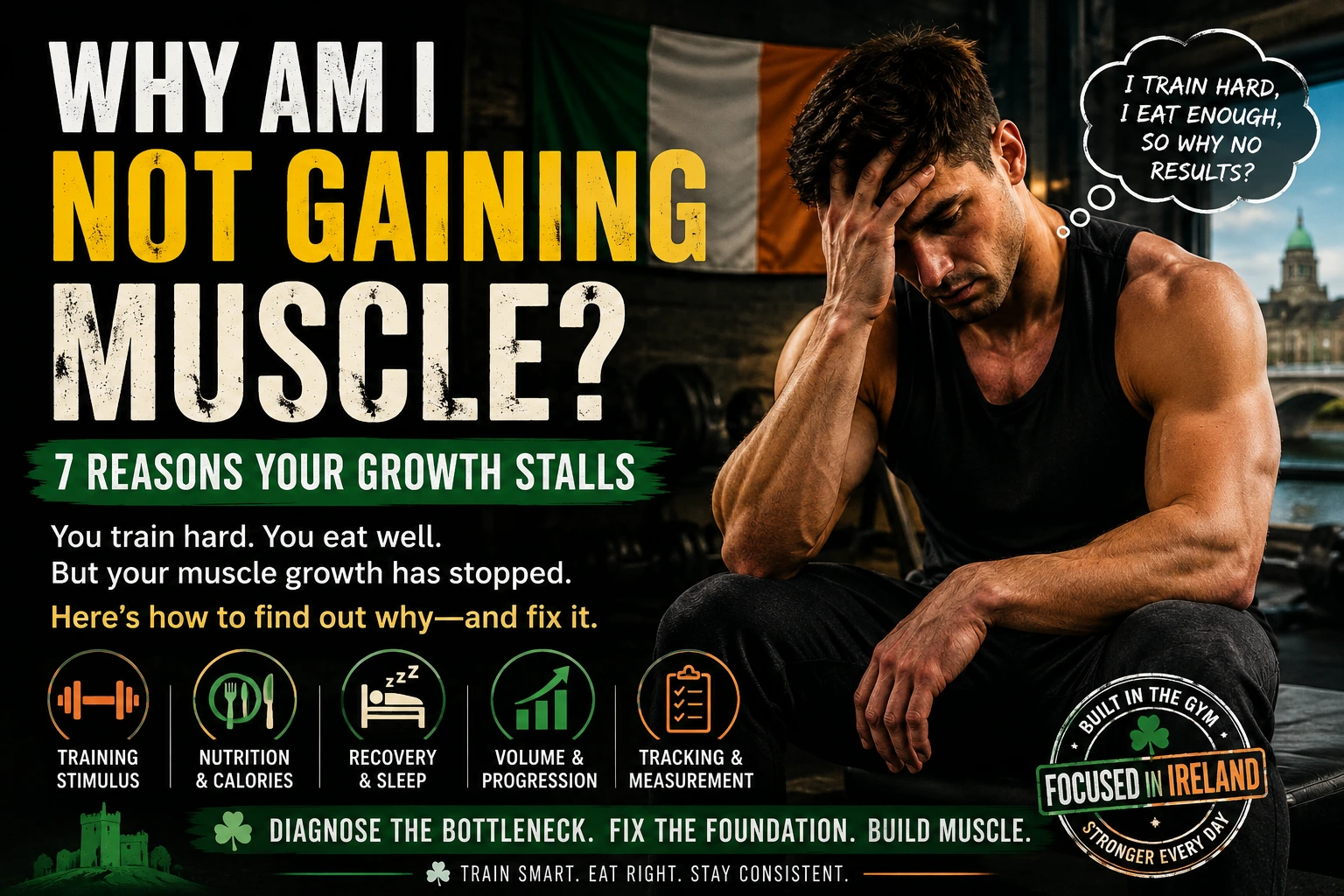
Why Am I Not Gaining Muscle? 7 Reasons Your Growth Stalls

Why Muscle Growth Stalls Even When You Train Hard

You train consistently, push your workouts hard, and may even be adding weight to the bar, yet your physique seems to have stopped changing.

If you are wondering “why am I not gaining muscle?”, the answer is not always that you need to train harder. Muscle growth depends on the interaction between training stimulus, nutrition, recovery and time. When one of those becomes the limiting factor, progress can slow even when effort remains high.

A recent review of muscle-growth plateaus also notes that long-term plateaus are complex and should not automatically be explained as simply reaching a fixed genetic limit.

This guide takes a diagnostic approach: first determine whether growth has genuinely stalled, then identify the most likely bottleneck before changing your programme.


First, Make Sure Your Muscle Growth Has Actually Stalled

Before changing your workout, adding calories or buying another supplement, make sure there is a genuine problem. Muscle growth is gradual, and daily changes in body weight, muscle fullness and workout performance can be misleading.

Your Scale Weight Has Not Changed

If your goal is to gain muscle and your body weight has remained virtually unchanged for a prolonged period, review your energy intake. Look at weekly averages rather than individual weigh-ins because hydration and food volume can move the scale from day to day.

Your Strength Has Stopped Progressing

Strength is not a perfect measure of hypertrophy, but it provides useful information about training adaptation. If performance has stopped improving across several key exercises, review your programme, technique, recovery and nutrition.

Your Measurements Look the Same

Track arm, chest, thigh and waist measurements alongside body weight, progress photographs and selected exercise performance. Several unchanged measures provide stronger evidence of a plateau than appearance alone.

You Are Judging Progress Too Quickly

A few flat workouts or several weeks without obvious visual change do not necessarily mean that your programme has failed. One controlled study found measurable strength and muscle-size improvements after four weeks of resistance training in previously untrained men, illustrating that adaptations can occur early while still varying between individuals.


1. Your Training Stimulus May Not Be Increasing

Training harder does not necessarily mean training better. If the same exercises, loads, repetitions and execution are repeated indefinitely without meaningful progression, the stimulus may no longer be changing enough to support continued adaptation.

Doing the Same Workout for Months

Consistency is valuable, but consistency should not mean performing identical workouts without progression. A training log can reveal whether repetitions, load, sets or execution are gradually improving.

Increasing Weight Without Improving Execution

Adding weight is useful only when the target muscles continue to receive an appropriate stimulus. Heavier loads that shorten range of motion or substantially change technique can make the number on the bar misleading.

Not Training Close Enough to Your Limit

Muscle growth does not require every set to be an all-out effort, but sets that are consistently too easy may provide less stimulus than intended. Aim for challenging, technically sound work that you can recover from.

Changing Programmes Too Frequently

If your programme changes every week, it becomes difficult to determine whether you are progressing. Keeping key movements stable long enough to collect useful performance data can make training easier to evaluate.


2. You May Not Be Eating Enough to Support Growth

Training provides the stimulus, while nutrition supplies energy and raw materials for adaptation. If you are trying to gain muscle while consistently eating around maintenance or below your needs, progress may be slower than expected.

Your Body Weight Is Completely Static

For a deliberate muscle-building phase, a completely static body-weight trend is a useful reason to review calorie intake. It is not an instruction to gain weight rapidly; it is a signal to compare your intake with your actual goal and progress.

You Are Underestimating Your Calorie Intake

Oils, sauces, snacks, drinks and inconsistent portions can make actual intake different from what you estimate. Tracking food for a period can establish whether your diet matches your intended target.

You Are Eating “Clean” but Not Enough

A diet can contain mostly nutritious whole foods and still fail to provide enough energy for a particular muscle-building goal. Food quality matters, but total intake matters too.

Your Protein Intake May Be Inadequate

Protein is particularly relevant because resistance exercise and protein intake both influence muscle protein synthesis. A systematic review and meta-analysis of 49 studies involving 1,863 participants found that protein supplementation augmented gains in fat-free mass and strength during prolonged resistance training. The analysis found no further increase in fat-free-mass gains above a total protein intake of about 1.62 g/kg/day, although the authors noted uncertainty around the precise breakpoint.

This should not be interpreted as a universal rule that everyone must consume exactly 1.6 g/kg/day. Individual requirements vary with body size, training status, energy intake and goals. The practical lesson is to pay attention to total daily protein rather than obsessing over one post-workout feeding.


3. Your Recovery May Be Limiting Your Progress

More training is not automatically better training. Resistance exercise creates a stimulus for adaptation, but your body also needs recovery to respond to it.

Training More Is Not Always Training Better

Adding sets can help when your workload is insufficient, but additional volume can also create fatigue without proportional benefits when recovery is inadequate.

You May Be Accumulating Too Much Fatigue

Training stress can combine with insufficient sleep, calorie restriction and normal life stress. If performance is declining and workouts feel increasingly difficult, the answer may not be another training day.

Sleep Can Affect Training Quality

Poor sleep can make it harder to train consistently and manage fatigue. Before adding another supplement, look at whether your recovery routine is actually supporting your training.

Rest Days Are Part of the Programme

A rest day is not wasted time. The appropriate amount depends on training frequency, volume, intensity, experience and individual recovery capacity.


4. Your Programme May Have Too Much or Too Little Volume

Too Little Work

If a muscle group receives very little challenging work, there may not be enough stimulus to maximize adaptation.

Too Much Work

More sets do not guarantee more growth. Once recovery becomes the limiting factor, additional work can make it harder to maintain high-quality training.

Quality Sets Matter More Than Endless Sets

Instead of chasing an arbitrary number of sets, choose a workload that allows productive training and recovery. Start with a manageable amount, monitor performance, and adjust gradually when the data supports a change.


5. You May Be Getting Stronger Without Seeing Obvious Size Gains

Strength and hypertrophy overlap, but they are not identical. Strength can improve through technique, coordination, neural adaptations, exercise familiarity and increases in muscle size.

Therefore, a stronger bench press or squat does not automatically mean your physique will change dramatically in the same period. Conversely, a slower rate of strength progression does not prove that no hypertrophy is occurring.

Use performance data together with measurements and photographs instead of relying on one metric.


6. Your Exercise Selection May Not Match Your Goal

Are You Actually Training the Muscle You Want to Grow?

Review whether your exercises and execution actually emphasize the muscle groups you want to develop.

Are You Using Exercises You Can Progress Reliably?

An exercise may be excellent in theory but difficult for you to reproduce consistently. Choose movements that allow useful performance comparisons from session to session.

Is Your Technique Consistent Enough to Track Progress?

If repetition quality changes substantially, apparent progress may simply reflect changes in execution. Consistent technique makes your training data more meaningful.


7. Your Expectations May Be Moving Faster Than Your Physiology

Beginner Progress Is Different From Advanced Progress

New lifters can often make relatively rapid improvements. As training experience accumulates, adaptation can become slower. A recent review describes declining rates of adaptation with chronic resistance training while emphasizing that plateau mechanisms are complex.

Visible Muscle Gain Takes Time

Small changes are difficult to see when you look at yourself every day. Consistent photographs, measurements and performance records make gradual progress easier to identify.

Compare Your Current Data, Not Someone Else’s Physique

Lighting, posing, genetics, training history and body composition can make online comparisons misleading. Your most useful comparison is your current data against your own historical data.


The Muscle-Growth Plateau Checklist

Question If the answer is “No”
Am I progressively challenging my muscles? Review training progression.
Is my calorie intake appropriate for my goal? Review food intake and body-weight trends.
Am I consuming enough protein? Review daily protein intake.
Am I recovering between sessions? Review sleep, fatigue and training frequency.
Am I tracking performance? Start recording key exercises.
Am I measuring physique changes? Add measurements and consistent photos.
Have I given the programme enough time? Avoid changing everything too quickly.

What to Change First When Muscle Growth Stalls

Step 1 — Check Your Data

Review body weight, measurements, photographs and training performance.

Step 2 — Check Training Progression

Determine whether your programme provides a progressive and repeatable stimulus.

Step 3 — Check Calories and Protein

Make sure your nutritional intake is compatible with your current goal.

Step 4 — Check Recovery

Look at sleep, rest days, training frequency and overall fatigue.

Step 5 — Make One Change at a Time

Changing your workout, calorie intake, supplements and sleep schedule simultaneously makes it difficult to identify what actually helped.

Step 6 — Reassess After Enough Time

Give the adjustment enough time to produce useful data before making another major change.


Do Supplements Matter When Muscle Growth Stalls?

Supplements can have a role in a muscle-building programme, but they should remain secondary to training, nutrition and recovery.

The large protein meta-analysis is useful here: resistance training itself was a much stronger stimulus for strength development than adding protein supplementation, even though protein supplementation provided additional benefits in the studies reviewed.

Where D-Bal Fits Into a Muscle-Building Routine

For readers who already have their training, nutrition and recovery fundamentals in place and are exploring additional sports-nutrition support, our D-Bal Ireland review provides a detailed look at the product, its current formula, intended use, potential benefits and limitations.

D-Bal should be considered supplementary support rather than a replacement for progressive resistance training, appropriate nutrition and recovery.


When Should You Change Your Programme?

Change It When Data Shows a Problem

If performance, measurements and recovery consistently indicate that your current approach is no longer working, a programme adjustment may be appropriate.

Do Not Change It Just Because Progress Feels Slow

Feeling impatient is not the same as having evidence of a plateau.

Give Adjustments Enough Time to Evaluate

Make changes systematically and record what happens. This turns your training programme into an ongoing experiment rather than a series of random changes.


Frequently Asked Questions About Muscle Growth Plateaus

Why am I not gaining muscle even though I work out regularly?

Possible reasons include insufficient training progression, inadequate calorie or protein intake, excessive fatigue, poor recovery, unsuitable exercise selection or simply not allowing enough time to see measurable changes.

Can you get stronger without gaining much muscle?

Yes. Strength can improve through technique, coordination and neural adaptations as well as increases in muscle size.

How do I know if my muscle growth has actually plateaued?

Look at body-weight trends, measurements, progress photos, training performance and programme consistency together. A short period without visible change is not necessarily a true plateau.

Should I eat more if I am not gaining muscle?

If your goal is muscle gain and your body weight and other progress markers remain stagnant, reviewing calorie intake is reasonable. Avoid making dramatic changes without first looking at your overall data.

Can too much training stop muscle growth?

Excessive training stress can interfere with recovery and performance. More training is not automatically better if you cannot recover from the workload.

How long should I wait before changing my workout programme?

There is no universal number of weeks that applies to everyone. Base the decision on training history, progression, recovery and multiple measures of progress.

Do supplements help if muscle growth has stalled?

Some supplements can provide useful nutritional support, but they should not compensate for inadequate training, nutrition or recovery. Address the fundamentals first.


Final Takeaway: Diagnose the Plateau Before You Fix It

If you are asking “why am I not gaining muscle?”, the first step is not automatically to train harder or buy another supplement.

Start by determining whether your progress has genuinely stalled. Then examine four major areas:

Training stimulus → Nutrition → Recovery → Measurement

If training is not progressing, improve the stimulus. If calorie or protein intake is inadequate, address nutrition. If fatigue is accumulating, improve recovery. If you cannot tell whether you are progressing, improve your tracking.

Only after these fundamentals are in place does it make sense to consider additional supplementary support.

For readers who have already built those foundations and want to explore a dedicated muscle-building supplement, see our D-Bal Ireland review for a detailed evaluation of the product and its current formulation.

The goal is not to do more simply because progress feels slow. The goal is to identify the limiting factor, make a measured adjustment, and give your body enough time to respond.

Muscles Grow While You Sleep

The Benefits of Sleep for Muscle Growth : The Overlooked Growth Secret

The Benefits of Sleep in Building Muscle: The Often-Underestimated Growth Secret

Many people think that muscle is only built in the gym—from heavy weights, painful final reps, and pouring sweat. However, there’s one crucial factor that actually works when you’re not lifting weights at all. That factor is sleep.

Ironically, sleep is often the first thing to be sacrificed. Working overtime, scrolling through social media, or staying up late for entertainment are often taken for granted. However, lack of sleep can actually destroy the training results you’ve worked so hard to build.

Muscles Don’t Grow During Exercise, But During Sleep

When you exercise, muscle fibers actually experience micro-damage. This is why your body feels sore after a workout. The actual muscle-building process—called muscle recovery and muscle hypertrophy—actually occurs while you sleep.

When you sleep, your body begins to repair damaged muscle tissue and rebuild it to become thicker and stronger. Without adequate sleep, this process is hampered, meaning your hard training can be wasted.

Sleep Triggers Growth Hormone

One of the greatest benefits of sleep for muscle building is the release of Growth Hormone (GH). This hormone is released in greatest amounts during restful sleep, especially during the deep sleep phase.

Growth hormone plays a vital role in:

  • Muscle regeneration
  • Increasing lean muscle mass
  • Fat burning
  • Body tissue repair

The better your sleep quality, the more optimal the production of this hormone. Conversely, lack of sleep can drastically reduce GH levels.

Sleep Helps Maintain Testosterone Levels

Testosterone is a key hormone in muscle building, especially in men. Adequate sleep helps maintain optimal testosterone levels.

Research shows that even a few nights of sleep deprivation can significantly lower testosterone levels. The result is:

  • Decreased strength
  • Difficulty gaining muscle mass
  • Recovery takes longer
  • Decreased training motivation

If you’re serious about building muscle naturally, sleep isn’t an option—it’s a necessity.

Lack of Sleep Increases the Stress Hormone (Cortisol)

When sleep is disrupted, the body produces more cortisol, a catabolic stress hormone. Cortisol can:

  • Inhibit muscle growth
  • Accelerate muscle protein breakdown
  • Improve recovery
  • Increase fat accumulation

This is why people who don’t get enough sleep often look “flat,” tire easily, and struggle to make progress despite regular training.

Sleep Quality Affects Training Performance

Good sleep isn’t just about recovery, but also about the next day’s performance. With enough sleep, you’ll experience:

  • More stable training energy
  • Increased focus and concentration
  • Better muscle coordination
  • Lower risk of injury

Training at peak performance means a more effective muscle stimulus—and faster results.

Sleep Helps Muscle Protein Synthesis

Muscle protein synthesis is the process by which the body uses protein from food to build new muscle tissue. This process is significantly accelerated during sleep, especially if you have:

  • Trained with weights
  • Consumed sufficient protein
  • Getted quality sleep

Without adequate sleep, protein synthesis slows, thus hampering muscle growth.

How Much Sleep is Ideal for Building Muscle?

For active exercisers, the recommended sleep duration is 7–9 hours per night. However, sleep quality is just as important as duration.

Some tips for improving sleep quality:

  • Sleep and wake up at the same time every day
  • Avoid screen time before bed
  • Reduce caffeine consumption at night
  • Create a dark and cool bedroom environment

Sleep is a Free “Natural Anabolic”

Many people look for expensive supplements to accelerate muscle growth, but sleep is the best natural anabolic you can get for free. It has no side effects, no cost, and offers long-term benefits for overall health.

If you’re training hard and eating right, but you feel like your results are slow, ask yourself: are you getting enough sleep?

Conclusion: Want Muscle Growth? Prioritize Sleep

Building muscle isn’t just about how heavy you lift, but also about how well you give your body time to recover. Quality sleep helps hormones function optimally, speeding up recovery, improving performance, and maximizing training results.

So, if you truly want a stronger, more muscular, and healthier body—start with one simple habit tonight: getting enough quality sleep.